
Cuvillier Verlag GmbH



| Fachbereiche | |
|---|---|
| Buchreihen (99) |
1423
|
| Nachhaltigkeit |
3
|
| Gesundheitswesen |
3
|
| Geisteswissenschaften |
2427
|
| Medienwissenschaften | 17 |
| Theologie | 59 |
| Philosophie | 105 |
| Rechtswissenschaft | 434 |
| Wirtschaftswissenschaften | 868 |
| Sozialwissenschaften | 425 |
| Sportwissenschaften | 48 |
| Psychologie | 233 |
| Pädagogik | 190 |
| Geschichtswissenschaften | 196 |
| Kunstwissenschaften | 111 |
| Kulturwissenschaften | 170 |
| Literaturwissenschaften | 120 |
| Sprachwissenschaften | 91 |
| Naturwissenschaften |
5436
|
| Ingenieurwissenschaften |
1827
|
| Allgemein |
97
|
|
Leitlinien Unfallchirurgie
5. Auflage bestellen |
|
Erweiterte Suche
Printausgabe
EUR 98,00
E-Book
EUR 68,60
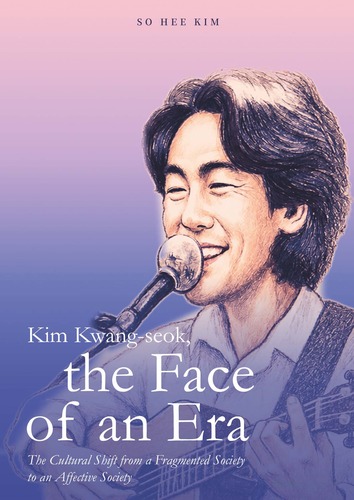
Kim Kwang-seok, The Face of an Era
The Cultural Shift from a Fragmented Society to an Affective Society
So Hee Kim (Autor) ORCID ISNIVorschau
Leseprobe, PDF (730 KB)
Inhaltsverzeichnis, PDF (700 KB)
In an increasingly fragmented and emotionally detached urban society, shared memories, social bonds and spaces for human interaction are gradually disappearing. This book explores how urban spaces can become places of emotional connection, collective remembrance and social solidarity despite growing competition, acceleration and individualization.
At its centre is the music of Korean singer-songwriter Kim Kwang-seok and the street named after him, Kim Kwangseok-gil Street. This particular urban setting illustrates how music, memory and shared experiences can revive lost emotional connections and bring people of different generations together. The street is examined as a distinctive space of memory and experience, where individual experiences of loss are transformed into collective memories and empathy.
From a cultural-sociological perspective, the book investigates the transition from a fragmented, emotionally detached society towards an affective community founded on mutual recognition, empathy and human connectedness. It brings together questions of urban transformation with broader reflections on cultural memory, identity, community and the significance of place for social life.
The book demonstrates how music and urban spaces of remembrance can build bridges between individuals and generations, fostering new forms of social belonging. It thus offers a perspective on the city as an emotional living space in which memory, longing and empathy become the foundations of a more humane and connected society.
| ISBN-13 (Printausgabe) | 9783689521097 |
| ISBN-13 (E-Book) | 9783689521103 |
| Buchendformat | B5 |
| Sprache | Englisch |
| Seitenanzahl | 196 |
| Umschlagkaschierung | matt |
| Auflage | 1. |
| Erscheinungsort | Göttingen |
| Erscheinungsdatum | 10.11.2026 |
| Allgemeine Einordnung | Sachbuch |
| Fachbereiche |
Soziologie
Kulturwissenschaften |
| Schlagwörter | Urban Sociology, Affective Society, Collective Memory, Urban Space, Sense of Place, Cultural Memory, Social Cohesion, Empathy and Solidarity, Music and Society, Urban Transformation, Stadtsoziologie, Affektive Gesellschaft, Kollektives Gedächtnis, Stadtraum, Ortsgefühl, Kulturelles Gedächtnis, Sozialer Zusammenhalt, Empathie und Solidarität, Musik und Gesellschaft, Städtischer Wandel |


