
Cuvillier Verlag GmbH



| Departments | |
|---|---|
| Book Series (99) |
1415
|
| Nachhaltigkeit |
3
|
| Gesundheitswesen |
3
|
| Humanities |
2413
|
| Natural Sciences |
5430
|
| Engineering |
1822
|
| Engineering | 292 |
| Mechanical and process engineering | 873 |
| Electrical engineering | 700 |
| Mining and metallurgy | 30 |
| Architecture and civil engineering | 76 |
| Common |
97
|
|
Leitlinien Unfallchirurgie
5. Auflage bestellen |
|
Advanced Search
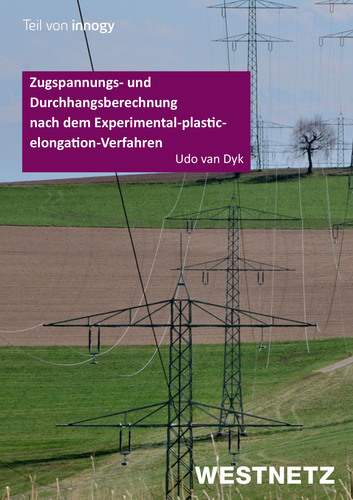
Zugspannungs- und Durchhangsberechnung nach dem Experimental-plastic-elongation-Verfahren (English shop)
Udo van Dyk (Author)Preview
Table of Contents, PDF (94 KB)
Extract, PDF (540 KB)
Methods for calculating tensile stresses and sags are among the most important tools for the planning and design of overhead lines. Building on the method commonly used in Germany, which has weaknesses in the calculation of modern high-temperature conductors, a method is presented that is based on a non-linear strain model. The results of the investigations carried out as part of type tests on conductors are used to parameterise the model. The permanent conductor elongation due to large additional loads or conductor creep is taken into account. As a result, tensile stresses and sags of high-temperature low-sag conductors (HTLS conductors) are represented with sufficient accuracy in high temperature ranges.
| ISBN-13 (Hard Copy) | 9783736995826 |
| ISBN-13 (eBook) | 9783736985827 |
| Final Book Format | A5 |
| Language | German |
| Page Number | 116 |
| Edition | 1. Aufl. |
| Publication Place | Göttingen |
| Publication Date | 2017-07-26 |
| General Categorization | Non-Fiction |
| Departments |
Electrical engineering
|
| Keywords | Tensile stress, sag, overhead line, high-temperature conductor, type testing of conductor cables, permanent conductor cable elongation, HTLS conductor |


